Three-year-old Oakley does not experience the world the way most children do.
In his earliest months, the world was dim and distant. Born with microlissencephaly and epilepsy, Oakley struggled with severe developmental challenges. His muscles were weak. His body did not move easily. Seizures interrupted his days. He made very few sounds. Even his vision was limited.
His mother learned to read the smallest shifts in his breathing, the faintest changes in his eyes. Every day required hands-on care. Feeding, positioning, comforting — nothing was simple. And yet, nothing was done halfway.
Oakley’s world felt small. But his family’s commitment to him was not.
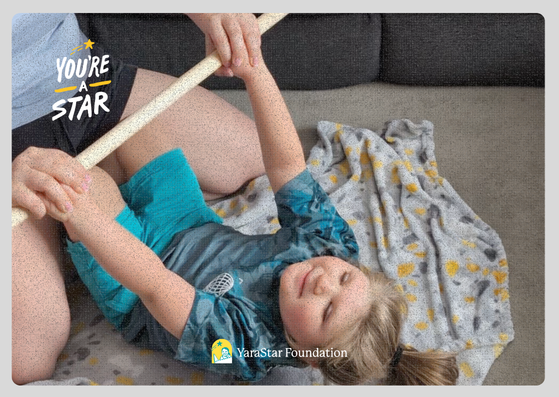
Because Oakley’s diagnoses affect muscle tone, sensory integration, and brain development, he was unable to play independently, interact with other children, or manage basic daily tasks like feeding or dressing. Frequent seizures and low mobility shaped daily family rhythms. With the high cost of specialized equipment and therapy, the weight of providing what Oakley needed was significant.
When Hope Began to Grow
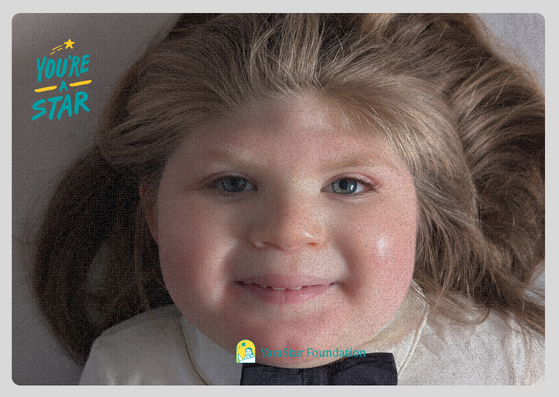
Oakley has been faithfully following a neurodevelopment program for a few years with consistency and discipline.
For several years, Oakley has followed a structured neurodevelopmental program at home — not casually, not occasionally, but faithfully.
His coach once described his starting point this way:
“Oakley came to our program blind, understanding lower than age level, with sensory issues, low mobility and almost no sounds. On the program he started seeing. He also communicates using a choice board.”
Those words are simple. But they hold a miracle.
Oakley began to see.
He began to notice faces.
He began to track movement.
He began to engage.
Today, he uses a choice board to communicate. He shows curiosity. He enjoys looking at reading cards. His eyes are alert in a way they once were not.
One of the most life-altering moments for his family? Oakley became tube-free.
That shift was not just medical progress. It was a declaration: his body was growing stronger.
The Work Behind the Progress
Oakley’s progress did not happen by accident. It is built on daily work.
His family carries out sensory exercises that help his body organize itself. They guide him through breathing activities that strengthen his lungs and support brain development. They work on controlled movements to build muscle tone and stability. They continue exercises designed to reduce seizures and increase independence.
Epilepsy and low mobility are still part of Oakley’s reality. But they no longer define his limits.
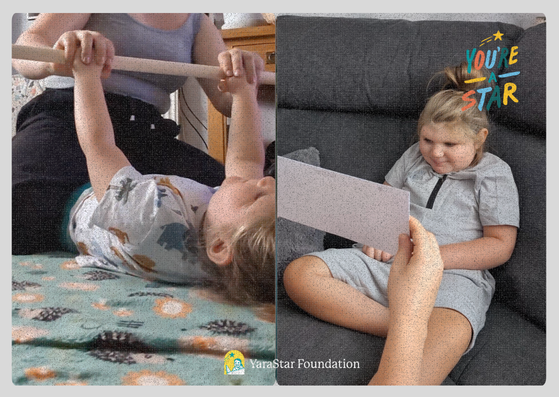
The next goal is greater movement — strengthening his body so he can leave the incline surface he has relied on and gain more independence on flat ground. Each step forward is intentional.
Sustaining the Journey
Oakley’s mother remains home full-time to implement his program. Continuing such intensive care in a single-income household is a stretch — emotionally and financially.
A scholarship from YaraStar Foundation made it possible to continue.
The next season will focus on strengthening his body, managing seizures, and expanding his cognitive engagement through reading and structured interaction.
Oakley’s story is still unfolding.
But today, he is seeing.
He is communicating.
He is smiling more often.
And for Oakley and his family, that changes everything.