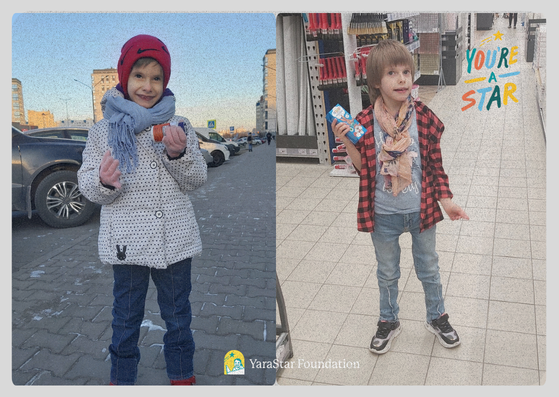
Young Anastasiya concentrates carefully as she steadies herself on her own two feet.
At nine years old, her life has been shaped by the effects of cerebral palsy, scoliosis, visual challenges, and convulsive syndrome — conditions that have required constant support and intentional care from the very beginning. But in the middle of therapies, routines, and daily structure, there is also a determined little girl who loves to smile, read, and keep trying.
Anastasiya lives with both of her parents, in a loving home where her needs shape the rhythm of every day. Her father works full-time outside the home, while her mother remains at home as her full-time caregiver because Anastasiya cannot yet manage daily living independently.
When Daily Life Requires Full-Time Care
Her diagnoses affect multiple areas of development — mobility, vision, coordination, communication, and physical endurance. She has needed assistance for movement, supervision for safety, and structured support for learning and social interaction. Long outings were once difficult. Physical weakness made certain activities exhausting. Changes in routine could be overwhelming.
With only one income and the cost of traveling internationally for in-person visits, continuing her neurodevelopmental program became financially challenging. Yet her family has remained consistent since 2019 — building daily rhythms around her growth.
A Program That Builds Layer by Layer
Through the Doman Method, Anastasiya follows an intensive, individualized neurodevelopmental program that supports brain organization through structured cognitive, respiratory, and physical activities.
Her recent progress reflects years of dedication:
She now walks independently for 30–40 minutes without holding hands.
She plays alone without constant adult entertainment.
She reads at age level (with larger print).
Long car rides are manageable.
Her nutrition and respiratory programs are strong and consistent.
“With all her progress so far, we are excited for the next steps of her journey.”- Doman Method Coach
Her older sister even participates in patterning and physical exercises, making the program a family effort.
Strength in the Small Gains
While progress is evident, challenges remain. Her hands are still weak during brachiation. Print size cannot yet be reduced without losing focus. Communication is still developing, and facilitated communication is not yet fully successful. She does not like sudden changes.
But the quality-of-life shifts are real.
She moves without fear of falling. She sustains attention longer. She tolerates sensory input better. She participates more naturally in family life.
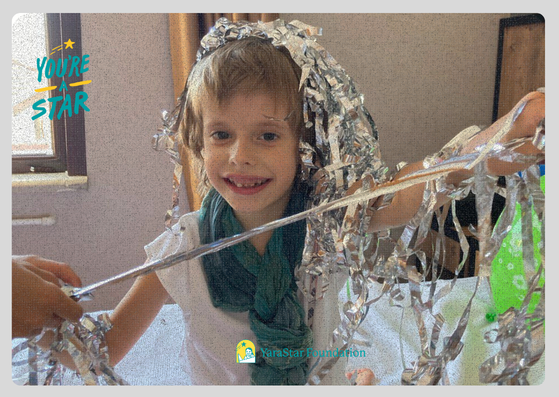
These are not small things for a child whose early life required constant physical support.
Sustaining What Is Working
With a YaraStar Foundation scholarship, Anastasiya was able to continue her therapy program and attend her in-person revisit — something the family could not have afforded on their own due to exchange rates and travel costs.
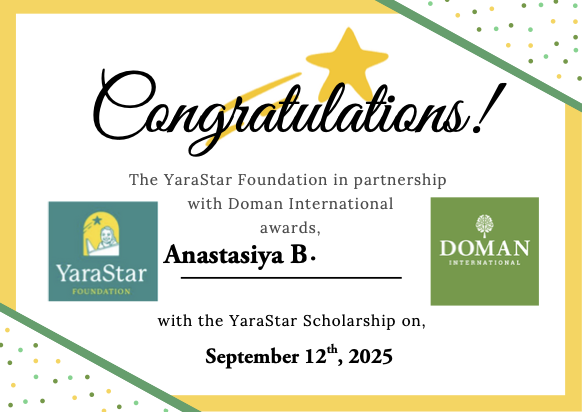
In the coming months, the family’s focus during her therapy will be on improving physical strength and mobility, along with supporting speech development.
Each layer builds toward greater independence.
Looking Ahead
Anastasiya’s family is able to hope for her future. One where she will continue strengthening her body, improving her understanding, and moving closer to running independently. They envision a future where her confidence grows alongside her abilities.
For families walking the long road of neurodevelopmental progress in cerebral palsy, Anastasiya’s story is a reminder: steady work over time creates visible change.