
At just one year and five months old, Truman’s world is already full.
Full of siblings’ laughter.
Full of homeschool books stacked on the kitchen table.
Full of older brothers and sisters who take turns cheering him on.
He is the youngest of six — and in this house, nobody moves alone.
When Inches Felt Like Miles
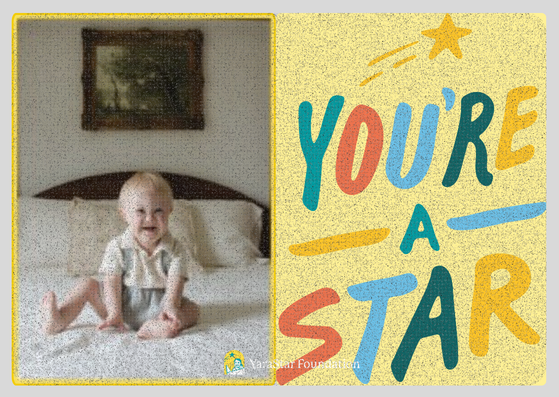
Truman lives with Down syndrome. In his earliest months, progress came slowly and quietly. He could crawl only two to three feet a day. Nursing was difficult. Bottles were a struggle. Leaving the house often required days of recovery afterward because the effort overwhelmed his system.
His responses were delayed. His vision was weak. Respiratory illnesses visited often.
Ashley, his mother, homeschools all six children. She babysits nephews three days a week. And yet, every day, she carved out hours for Truman’s program. His siblings joined in — holding, cheering, helping. His father, Titus, working from home, stepped in for physical activities whenever possible.
With six children under one roof, funding an intensive neurodevelopmental program required sacrifice. They fundraised for Truman’s first appointment. But when his needs increased during the next period, raising funds again was no small task.
Still, they did not step back.
The Setback That Didn’t Win
At first, progress came quickly. A special supplement gave him new energy. He became more alert. More engaged. More present.
Then came a virus. A medical procedure. A small regression that shook everyone’s confidence.
But this family does not give up easily.
His siblings took turns helping. His father joined the physical exercises after work. They continued — gently, patiently — until the spark returned.
And it did.
The Boy on the Move
Truman’s eyes now lock onto faces and images with clarity. He recognizes his family instantly. He responds more quickly to sound. He distinguishes between objects in his hands. He crawls with purpose — not just inches, but across rooms. Recently, his parents captured a video of him beginning to push himself up, preparing to move in a new way.
His language is still fragile, especially after being sick. But the foundation is there. His understanding is growing. His body is getting stronger.
“The Doman Method has given us what we hoped for and wanted to believe about Truman from birth — that we should always assume intelligence,” his mother shares. “That will be key to Truman’s potential and in his future.”
In a home where everyone plays a part in his progress, Truman is not defined by delays. He is defined by direction.
And for this little boy, direction matters more than speed.