
“I Just Want Him to Tell Me He Loves Me”
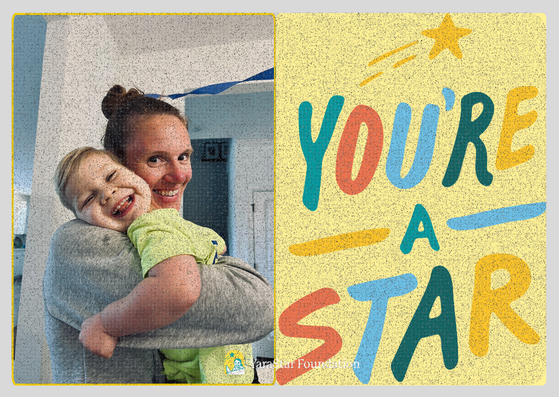
She was on a call with a program coordinator she had never spoken to before. She had just finished explaining her son's diagnosis — the long clinical name, the seizures, the limited movement, the prognosis she was still trying to live alongside.
And when the coordinator asked what she hoped for, his mother said the only thing she knew for certain she wanted:
"I just want him to tell me I love you one day."
Not walking. Not running. Not a full sentence.
Just that.
Because at that point, it did not feel like something he would ever be able to do.
What Other Parents Don't Think About
Most parents never think about whether their child can reach into a bag and pull out a toy. Or crawl across a room. Or call out when they are hurting.
His parents think about all of them. Every day.
Grayson is 3.5 years old, born with congenital absence of the corpus callosum and epilepsy — two minutes behind his twin brother, and from his earliest days, navigating a very different world.
The Day the Doctor Walked Out
He was two months old when they did the MRI.
The neurosurgeon came in, looked at the results, and delivered a verdict his parents were not prepared to hear.
“He would not walk. He would not talk. He would not develop emotionally past where he was at that moment” — two months old, already rolling, already showing signs that felt like small miracles to the people who loved him.
He said, “I can't offer you anything. There's no one I can point you to. Sorry. And he walked out."
He did offer one thing before he left. Some YouTube videos, he said, that could show them what their son's life would look like.
That was all.
His parents went home not knowing how to cope, how to grieve, or how to keep going.
In that season, they made a deliberate choice to protect their hope. They understood that without it, the road ahead would be almost impossible to walk.
A House That Became a Therapy Floor
The years that followed were full — and hard.
He had frequent seizures. He had very little control of his body. Simple things that other children did naturally — grabbing a toy, feeding himself, exploring the space around him — were not yet within his reach. And when he needed something, when he was uncomfortable or hurting or overwhelmed, he had no way to say so. His parents learned to guess. They were right sometimes. Often they were not. The frustration built into emotional outbursts that exhausted everyone.
They worked with a number of specialists during that period, each pulling in a different direction. Without a single cohesive plan, it was difficult to find a clear path forward for a child whose needs were layered and complex.
Then his father found something while searching for help with his son's sleep. A name kept appearing — a program focused on child brain development. His parents read the book. They got on a call with the team at Doman International.
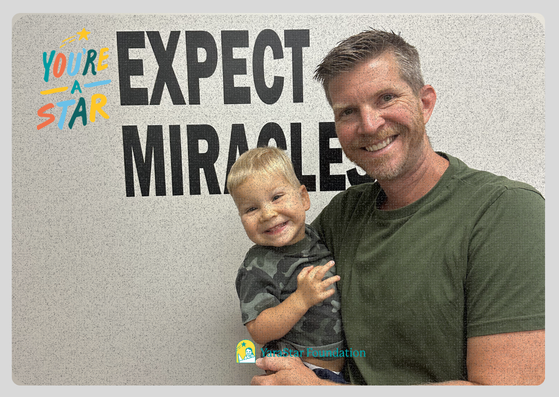
The approach was different from anything they had encountered. The focus was not on what he could not do — it was on what he could still learn, given consistency, structure, and the right daily input.
What It Actually Takes
To say that his parents are committed to Grayson's program is to understate it considerably.
Both parents made significant professional and financial sacrifices to ensure one of them could always be with him. They did not do it alone — family and community came alongside them. And at home, the work continued daily, in a space built entirely around his growth.
What does that actually look like? It means most of your day is structured around your child's program. It means your older child's schedule and your toddler's nap and your own energy are all managed around the work that still needs to get done before the day ends. It means that when you sit down in the evening, you are not resting. You are thinking about tomorrow.
It means not stopping, even when it feels impossible. Even when the progress is slow. Even when you are not sure it is working.
"We honestly thought we'd see progress pretty quickly. What we learned is that with kids like Grayson, there really aren't any quick fixes. It takes consistency, patience, and daily hard work. Progress has come slowly, and sometimes it's felt exhausting and overwhelming. And then: But even with that, we've seen real, meaningful gains, and if anything, the journey has strengthened our commitment to keep going." - Grayson’s Mom
The Little Things They Celebrate
In a recent session with his Doman coach, Grayson was sitting on the floor when a bag of toys was placed beside him.
He reached in and pulled one out.
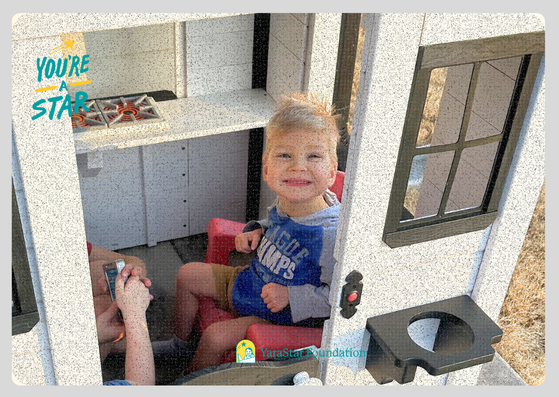
His parents erupted. His coach looked at them — what happened? Was that the first time?
It was.
They had always just handed toys directly to him. Set them right in front of him. It had never occurred to them to make him reach.
His coach smiled and told them: you need to start making it harder for him.
"The little things we celebrate," his mother said.
She is right. And those little things have been stacking up.
He now crawls independently — across the floor, around the house, for his own purposes, toward things he wants. His best day: 229 feet. He can get up onto his hands and knees. He is working toward creeping, and it is the focus of his next phase of the program.
His seizures have decreased significantly. He is completely off seizure medication.
He says words now. About 50 of them. He communicates in short couplets. He has learned to read — above his age level — something his family describes with the kind of quiet wonder that comes from knowing how far that is from where they started.
He plays with his brothers now. He rolls a ball back and forth with them. He joins in.
And he says "love you."
What the Scholarship Made Possible
His family made significant professional and financial sacrifices to ensure he always had a parent present. Staying in a program that requires consistency, structure and daily commitment comes with real costs — and a YaraStar scholarship made it possible to continue without interruption.

His family does the work. The scholarship helps make sure they can keep going.
His parents wrote to us:
"We are thankful for you, for Yara's life, and for the YaraStar Foundation."
We are so honored to walk alongside Grayson and his incredible family. If you would love to share hope, please share Grayson’s story.